2020 DHHBA Conference Announcement

Chicago Bean and Skyline

The Deaf and Hard of Hearing Bar Association (DHHBA) will hold its inaugural DHHBA Conference (DHHBACon) on June 29-30, 2020 in Chicago, Illinois at the Sheraton Grand Chicago. DHHBACon will provide professional development and networking opportunities for deaf, hard of hearing, late-deafened, and deafblind judges, attorneys, law school graduates, paralegals, law students, and other legal professionals in the United States and Canada.

More details, fees, and registration will be posted at https://deafbar.org/dhhbacon2020 and https://www.facebook.com/events/2143842315719636 .

Please note that while DHHBACon will take place immediately before the National Association of the Deaf (NAD) Biennial Conference, DHHBACon is not affiliated with NAD. We are appreciative that NAD is sharing conference and hotel arrangements with DHHBA, which helps make our inaugural conference possible.

Tentative DHHBACon 2020 Schedule:

June 29, 2020 – Sightseeing and networking events around Chicago

June 30, 2020 – All-day program at the Sheraton Grand Chicago

Hotel group rates will be available for June 28 to July 5, 2020.

Please enter your email address to stay informed on DHHBACon 2020 and other DHHBA updates and announcements:

[jetpack_subscription_form show_only_email_and_button=”true” custom_background_button_color=”undefined” custom_text_button_color=”undefined” submit_button_text=”Subscribe” submit_button_classes=”undefined” show_subscribers_total=”false” ]

If you are interested in volunteering, sponsorships, or other DHHBACon opportunities, please contact us below:

Past DHHBA President Anat Maytal Featured in Boston University School of Law Alumni Magazine

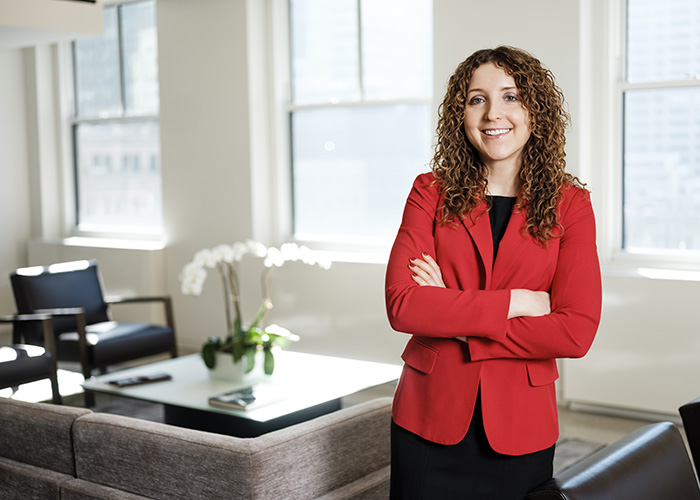
Photo by Chris Sorensen for Boston University Photography

Past DHHBA President and current DHHBA member Anat Maytal was recently featured in Boston University School of Law’s alumni magazine, The Record, at http://www.bu.edu/law/2019/05/29/pushing-through, where you can learn about her impressive career accomplishments as well as her role in persuading the United States Supreme Court to allow electronic devices into their courtroom for the first time in history.

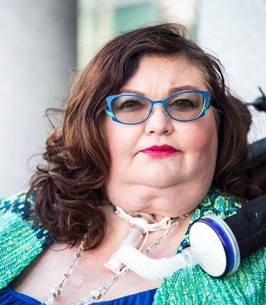
DHHBA remembers member Carrie Ann Lucas

Carrie Ann Lucas was a valued member of the Deaf and Hard of Hearing Bar Association, mentoring attorneys and law students, sharing advice, and serving as an incredible role model for the impact that an attorney with a disability can have on the world. Words do not do justice to the powerful disability rights legacy that Carrie leaves behind.

Obituary: https://memorials.marksfuneralservice.com/carrie-lucas/3748541/index.php

Carrie’s Blog: http://www.disabilitypride.com

Disability Community Loses one of our Rock Stars: http://www.ccdconline.org/tag/civilrights/

Carrie Ann Lucas Dies At Age 47, You Probably Haven’t Heard Of Her And That’s A Problem: https://www.forbes.com/sites/sarahkim/2019/02/25/carrie-ann-lucas-dies/#20cbecfe119e

Introducing the new DHHBA Board of Directors

Please welcome our new DHHBA Board of Directors, effective January 1, 2019 for a term of two years pursuant to the DHHBA bylaws.

The outgoing DHHBA Board of Directors, as its last act, voted to adopt a standard practice used by other nonprofit boards and appoint outgoing DHHBA President Anat Maytal as President Emeritus, an advisory role that does not have voting privileges.

President – Rachel Arfa

President Emeritus – Anat Maytal

Secretary – Debra Patkin

Treasurer – Sarah Weimer

National Association of the Deaf (NAD) Liaison – Zainab Alkebsi

Alexander Graham Bell Association for the Deaf and Hard of Hearing (AGBell) Liaison – Elizabeth Knox

Hearing Loss Association of America (HLAA) Liaison – Reema Radwan

Legislation Introduced to Require DC Movie Theaters to Show Movies with Open Captions

District of Columbia Councilmember Charles Allen, along with three co-sponsors, recently introduced the Open Movie Captioning Requirement Act of 2018 to the Council of the District of Columbia. This legislation would require DC movie theaters to show movies with open captions. Many deaf and hard of hearing individuals have always found open captions – in which captions are displayed on the screen – to be the most accessible option. The open captioned movies would be listed on outlined dates and times throughout the weekly schedule, ensuring that everyone has the opportunity to enjoy the movies! As such, this legislation is a monumental step forward to ensure accessibility and inclusivity at the movies, especially for Washington, DC moviegoers.

Movie theaters offer devices that meet Americans with Disabilities Act (ADA) requirements but oftentimes, these devices do not work and leave individuals feeling as though they have missed major parts of the movie. These devices malfunction, have connectivity issues leading to dropped dialogue throughout the movie, or have not been fully charged by movie theater staff. The devices that fit into cupholders are in awkward positions next to the chair. Captioning glasses also have several issues. For example, the wires connected to the glasses get easily tangled up while trying to adjust the fit. Captioning glasses on top of prescription glasses are very uncomfortable and their heaviness have been known to cause headaches. While these devices are supposed to encourage deaf and hard of hearing moviegoers to enjoy movies in theaters, the obstacles created by these devices deter deaf and hard of hearing moviegoers from attending. The best solution to these myriad obstacles is open captioning! It allows everyone – the deaf, hard of hearing, late deafened, veterans with hearing loss, senior citizens, English as a Second Language (ESL) learners, people with auditory processing disorders or developmental disabilities, family members, and friends of the aforementioned groups, as well as the growing segment of the population that generally enjoys watching movies and television shows with captions – to enjoy the rewarding experience of watching a movie without drawbacks.

The Council of the District of Columbia will hold a public hearing on the Open Movie Captioning Requirement Act of 2018 on Tuesday December 11, 2018 at 12:30 PM at 1350 Pennsylvania Avenue, NW, Washington, DC 20004 . If you live in the Washington, DC area and want to show your support, I encourage you to attend the hearing. Even if you do not live in the DC area, I encourage you to submit written testimony by December 21, 2018 to [email protected]. It is my hope that this legislation will lead to similar efforts nationwide.

Reema Radwan serves on the Deaf and Hard of Hearing Bar Association (DHHBA) Board and is an attorney who has been involved in legislative efforts to require DC movie theaters to show movies with open captions. 

Disclaimer: The views and opinions expressed in this post are those of the author and do not necessarily reflect the official policy or position of the Deaf and Hard of Hearing Bar Association (DHHBA). Additionally, this post does not constitute legal advice and does not create an attorney-client relationship with anyone. If you need to contact an attorney, please visit our Find A Lawyer page.


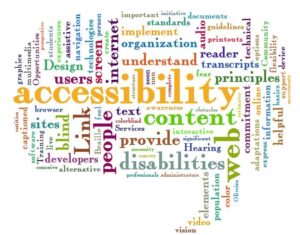
Is Your Website ADA Compliant?

This last year alone, federal courts in Florida, California, and New York have ruled that employers that provide public accommodations, including Winn-Dixie, Five Guys, and Blick Art Materials, must make their websites accessible to disabled consumers.

Despite the fact that 19 percent of the population in the United States (or about 56.7 million Americans) have a disability, most companies do not factor in website accessibility when designing their websites and related smartphone applications. But since 2006, when Target settled a class action lawsuit in California alleging Target.com was inaccessible to the blind in violation of Title III of the Americans with Disabilities Act (ADA), the issue of whether the law applies to commercial websites is a growing concern for small and large businesses alike.

Briefly, Title III of the ADA requires accessibility for disabled persons to places of public accommodation, barring businesses from discriminating “on the basis of disability in the full and equal enjoyment of the goods, services, facilities, privileges, advantages, or accommodations of any place of public accommodation . . .” 42 U.S.C. § 12182(a). Increasingly, disabled plaintiffs have argued that the ADA requires any employer that utilizes a website providing access to goods and services to make that website accessible.

However, the law remains somewhat unsettled. Federal courts are split on the threshold question of whether websites are places of public accommodation and, if they are, what steps are required to make them accessible under the ADA.

The 3rd, 9th and 11th Circuit courts that have concluded that places of public accommodation must be physical spaces have held that the goods and services provided by a public accommodation must have a sufficient nexus to a physical place in order to be covered by the ADA. See, e.g., Earll v. Ebay, Inc., 599 Fed. App’x. 695, 696 (9th Cir. 2015) (the term “place of public accommodation” requires some connection between the good or service alleged to be discriminatory and a physical place). In the Target case, the Northern District of California held that where a website is heavily integrated with physical store locations and operates as a “gateway” to the physical store locations, the website is a service of a public accommodation and is covered by the ADA. See Nat’l Fed’n of the Blind v. Target Corp., 452 F.Supp.2d 946, 953-55 (N.D. Cal. 2006).

But the 1st, 2nd and 7th Circuit courts apply the ADA more broadly to include websites that lack any connection to a physical space. As one court within the 2nd Circuit explained, with the internet central to every aspect of the “economic and social mainstream of American life,” excluding from the ADA any business that sells services through the internet “would run afoul of the purposes of the ADA and would severely frustrate Congress’s intent that individuals with disabilities fully enjoy the goods, services, privileges, and advantages available indiscriminately to other members of the general public.” Nat’l Fed’n of the Blind v. Scribd Inc., 97 F. Supp. 3d 565, 575–76 (D. Vt. 2015) (internal citation and quotation omitted).

In July 2010, the U.S. Department of Justice (DOJ) published an advance notice of proposed rulemaking seeking comment on the possibility of regulating websites as places of public accommodation under the ADA. Noting that “[i]ncreasingly, private entities are providing goods and services to the public through websites that operate as places of public accommodation,” the DOJ took the position that it was only logical to bring websites under the same regulation as physical, brick-and-mortar stores. However, since the DOJ began its rulemaking process, it has postponed issuance of final rules year after year. That said, the DOJ has filed statements of interest in numerous cases filed against employers with websites and entered into consent decrees with certain employers, including Peapod and H&R Block, using as a guide compliance standards developed by the World Wide Web Consortium called the “Web Accessibility Guidelines” or “WCAG 2.1 AA.”

While the federal courts remain split and the DOJ continues to delay the rulemaking process, employers should take a second look at their websites and mobile applications. The cases mentioned here are part of a growing trend, and while website accessibility may seem expensive, the alternative costs of litigation that may result – not to mention lost customers – are comparable.

Anat Maytal is President of the Deaf and Hard of Hearing Bar Association. She graduated from Harvard University and Boston University School of Law. She is a litigator in New York.

Disclaimer: The views and opinions expressed in this post are those of the author and do not necessarily reflect the official policy or position of the Deaf and Hard of Hearing Bar Association (DHHBA). This post does not constitute legal advice and does not create an attorney-client relationship with anyone. If you need to contact an attorney, please visit our Find A Lawyer page.

Sky surrounded by hazy clouds with a military airplane flying three quarters out of a large, vertical oval cloud.

A Brief History of Deaf and Hard of Hearing Attorneys

If you are visiting our website, then you probably have an interest in deaf and hard of hearing lawyers. Perhaps you are deaf or hard of hearing and need legal representation. Or perhaps you are, or know of someone who is, deaf or hard of hearing and considering going to law school.

You most likely know that a good number of deaf lawyers exist. But you may not know how they “made it” as lawyers.

In 2011, I published a law review article entitled Breaking the Sound Barriers: How the Americans With Disabilities Act and Technology Have Enabled Deaf Lawyers to Succeed. In the article, I discussed the history of deaf lawyers from the mid-nineteenth century to (then) present-day. While much had been written about individual deaf lawyers prior to that time, no one had pulled together their stories in a single written work. While researching my article, I was struck by how often people discussed their experiences and talked about the same issues they faced. Later, I was equally struck by how often people wrote to me saying “Hey! That happened to me, too!” after they read my article.

Much of the history of deaf and hard of hearing lawyers parallels the history of deaf and hard of hearing people in general. As technology progressed, and as accessibility laws were enacted, the opportunities for deaf and hard of hearing lawyers (and deaf and hard of hearing people in general) increased and the barriers we faced were broken. Understanding how we got to this point is crucial to ensuring that the progress continues.

And progress has continued. When I wrote my article in 2011, there was only a handful of deaf lawyers who were admitted to the United States Supreme Court Bar. Today, there are over thirty. It is only a matter of time before a deaf or hard of hearing lawyer argues a case before the U.S. Supreme Court. In fact, I argued a case before a U.S. Supreme Court justice earlier this year, but it was before the U.S. Court of Appeals for the First Circuit, not the U.S. Supreme Court.

Since my article was published, more stories about our experiences have been written. In 2013, deaf lawyer Gerald Shea wrote his autobiography, Song Without Words: Discovering my Deafness Halfway Through Life. Earlier this year, deaf lawyer Melissa Felder Zappala was featured in the American Bar Association magazine. A little before that, the Utah Deseret News did a profile on Jared Allebest.

Many more stories exist. Perhaps someday I will update my 2011 article to include their stories.

And of course, like every demographic, some deaf lawyers have decided to diversify their legal practice and experiences to include other interests. Such is the case for Melissa Kubit Angelides when she joined the St. John’s University Law School Office of Career Development.

The same is true for Amanda Upson, who is now a film producer.

John Stanton became deaf in early childhood. He graduated from Dartmouth College and from the Georgetown University Law Center. After over a decade working in private practice, he is now an attorney for the U.S. Department of Justice. He may be contacted at [email protected].

Disclaimer: The views and opinions expressed in this post are those of the author and do not necessarily reflect the official policy or position of the Deaf and Hard of Hearing Bar Association (DHHBA). Additionally, this post does not constitute legal advice and does not create an attorney-client relationship with anyone. If you need to contact an attorney, please visit our Find A Lawyer page.

Movie Theater Captioning, Part 4 of 4: We’re Not Done Yet

Open captioning is great. The captions are right there on the screen. We don’t need to self-identify and pick up a viewing device. The theaters don’t need any special equipment – they just select the open-caption option from the digital data package, and the captions appear for that showing.

While we like open captions, the theaters don’t – or at least, they haven’t. Their concern is that a lot of hearing people find open captions distracting. And they have some old data to back this up – prior to digital conversion, Regal showed some open-captioned movies at off hours, and attendance at the captioned showings was lower than attendance at non-captioned showings.

My offhand observation is that people actually exposed to open captioning don’t find it all that offensive, but a lot of people think they won’t like it. From the theaters’ point of view, that’s actually the worst possible situation, because those folks won’t give open-captioned movies a try. And from our point of view, the problem is that a number of the people who think open captioning would be a distraction wear judicial robes or are federal regulators. So even when we win smashing victories for closed captioning, we lose on open captioning.

And yet . . . there is hope. I’ve always taken the position that lower attendance at individual open-captioned showings doesn’t mean much, and that the real issue is whether some open-captioned showings reduce overall theater revenue. My hypothesis has always been that if open-captioned showings are publicized in advance, people who don’t want open captions will go to a different movie at the multiplex or go to a different showing, in which case the theaters don’t lose any money. Conversely, people who really do want and need open captioning, even if relatively few in number, represent revenue that the theaters would otherwise not realize.

There is interesting data available. Hawaii passed a law effective in 2016 requiring the larger theater chains in that state to offer some open-captioned showings. (There is some question about whether all the Hawaii lawmakers realized that the theaters already were offering closed captioning.) The affected theaters in Hawaii did a nice job implementing that law in good faith – the open-captioned showings were at different times, not all at off hours, and it appeared possible to see essentially any movie with open captioning at some point during the week.

Here’s the interesting thing – even though the Hawaii law expired at the end of 2017, the theaters there appear to still be offering some open-captioned showings. Other theaters in other parts of the country are doing the same. So even though the legal battle may have been lost, the public-relations and customer-service approaches appear workable, and in fact, appear to be gaining ground. It certainly helps to have high-profile individuals like Nyle DiMarco speak out in favor of open captioning. (I would suggest that any open-captioned movie Nyle DeMarco planned to attend would have a terrific turnout.)

There are ways captioning can be made to work for everyone. A typical movie is shown 31 times per week – four showings each weekday, five each weekend day. (Friday is a weekend day for movies.) People with hearing loss represent about 8% of the United States population, and we vastly prefer open captioning. Would it be too much to ask theaters for two open-captioned showings at each auditorium each week? And would it be too much to ask that those showings be staggered, so that there is essentially always at least one open-captioned movie at the multiplex, and at least one opportunity to see each movie on a weekend?

I think the key here is to be reasonable, and recognize the legitimacy of the theaters’ concerns. We cannot expect everyone to “live in our world” and accept open captioning immediately, nor can we expect the theaters to accept reduced attendance on the opening weekend of a real blockbuster, when people who don’t want open captions really might go elsewhere. But by week three or four, even blockbusters aren’t filling the auditorium any longer, and open-captioned showings could be scheduled at times that wouldn’t reduce overall theater attendance.

One great thing about the ADA, as we all know, is that it does not trump state or local laws more protective of people with disabilities. If we don’t like what ADA gives us, we can try to get our state or city to do better. Drawing on the Hawaii experience, I think reasonable open-captioned accessibility is a promising subject for such laws. I know efforts are under way in some jurisdictions, and I hope efforts of this sort flower in many spots.

Having been involved in movie theater captioning litigation for the past ten years, I’m happy to see a project of this magnitude finally coming to a reasonably successful conclusion. We’ll be able to have captions for essentially every movie, although there are a few small independent films that may still be released without captions, and there’s the persistent, vexing and unexplained problem of uncaptioned previews. But with the adoption and implementation of the DOJ regulations, the theater doors are largely open to us once again.

Movie Theater Captioning, Part 1 of 4: A Wonderful Statute and an Unexpected Problem

Movie Theater Captioning, Part 2 of 4: The Tide Turns

Movie Theater Captioning, Part 3 of 4: A National Requirement

John Waldo is counsel to the Association of Late Deafened Adults (ALDA), a nationwide support and advocacy group, and to the Washington State Communication Access Project (Wash-CAP) and the Oregon Communication Access Project (OR-CAP), two statewide advocacy groups.

Disclaimer: The views and opinions expressed in this post are those of the author and do not necessarily reflect the official policy or position of the Deaf and Hard of Hearing Bar Association (DHHBA). Additionally, this post does not constitute legal advice and does not create an attorney-client relationship with anyone. If you need to contact an attorney, please visit our Find A Lawyer page.
Movie Theater Captioning, Part 3 of 4: A National Requirement

The U.S. Department of Justice, which is empowered to enact regulations implementing the ADA, had shown a mild interest in movie captioning as early as 2008, when it indicated that it might enact regulations at some future time. Then in July 2010, very shortly after the Harkins decision came down, DOJ proposed regulations that would require theaters to provide captioning in 50% of their auditoriums.

At this point, the Harkins case was back in district court on remand to ascertain the point, if any, at which captioning would be an undue financial burden. The theater then tried a Hail Mary move, and asked the court to stay any further action pending final DOJ regulations. DOJ filed a Statement of Position opposing the stay, saying that accessibility is required by ADA, that implementation should not await regulations, and that the question of undue burden was one uniquely suited for resolution in court.

Essentially, DOJ told not just the Harkins chain but essentially all theaters that they had two choices. They could either provide closed captioning, or they could be subject to piecemeal litigation in multiple jurisdictions that they would probably lose.

By early 2011, the major theater chains had essentially seen the light and given up. In part to resolve a follow-up case in California, Cinemark and Regal committed to every theater captioning nationwide. In our Washington State case, AMC committed only to doing what DOJ might ultimately require, and argued that providing captioning in every theater would be an undue burden because the cost of providing caption-viewing devices would exceed the revenue those devices might generate. AMC lost that argument in Washington State on the basis that undue burden must be measured based on overall ability to afford the accommodation, not on whether providing them is cost-effective. In less than a month after that state court ruling in Washington State, AMC also agreed to 100% compliance nationwide.

DOJ also realized that its 2010 proposed regulations for captioning at 50% of theaters was outmoded, because it was far less access than was actually being provided. DOJ issued new proposed regulations in 2014 calling for closed captioning in every auditorium of every theater once that theater converts to digital projection. The stated rationale for the regulations is to ensure that the results obtained through litigation are realized on a uniform, nationwide basis.

Final regulations were adopted on December 2, 2016. They are found at 28 CFR 36.303(g). They provide an 18-month phase-in, so the magic date is June 2, 2018 for most theaters. (Theaters that had not converted to digital projection by December 2, 2016 – the publication date for the regulations – have until December 2, 2018 to provide captioning.) The regulations state that caption-viewing devices must be adjustable so that captions can be viewed in the same line of sight as the screen. The regulations also require theaters to provide movie-by-movie notice that captioning is available.

And there we have it – an essentially completed project. But a lot of us remain disappointed that the DOJ and the courts have given controlling weight to the legislative history, and have refused to require open captioning, which most of us prefer. Is there any hope there?

Movie Theater Captioning, Part 1 of 4: A Wonderful Statute and an Unexpected Problem

Movie Theater Captioning, Part 2 of 4: The Tide Turns

Movie Theater Captioning, Part 4 of 4: We’re Not Done Yet

John Waldo is counsel to the Association of Late Deafened Adults (ALDA), a nationwide support and advocacy group, and to the Washington State Communication Access Project (Wash-CAP) and the Oregon Communication Access Project (OR-CAP), two statewide advocacy groups.

Disclaimer: The views and opinions expressed in this post are those of the author and do not necessarily reflect the official policy or position of the Deaf and Hard of Hearing Bar Association (DHHBA). Additionally, this post does not constitute legal advice and does not create an attorney-client relationship with anyone. If you need to contact an attorney, please visit our Find A Lawyer page.
Movie Theater Captioning, Part 2 of 4: The Tide Turns

While courts were struggling with the concept of movie captioning, technical developments were moving in the right direction. Although under no legal obligation to do so, most movie studios began providing captioning for their releases, and furnished the captions free of charge to the theaters. Also, the theaters and studios were moving closer to digital distribution and projection, in which digital data packages replaced traditional 35 mm film. Again, captions would be furnished free of charge to the theaters. The theaters’ obligation would be to purchase, install, and use the equipment needed to allow the captions to be viewed.

The legal landscape was also shifting dramatically. The perfectly awful Arizona district court case went up on appeal. Since that was the first of the movie-captioning cases to reach the appellate level, we knew it would be really important. John Stanton and I, among others, wrote amicus briefs. Knowing that there would likely be some deaf people in the audience, I was “assigned” to ask for live CART captioning in the courtroom for the oral argument, and that was provided.

Oral argument before the U.S. Court of Appeals for the Ninth Circuit was in San Francisco in January of 2010, and it was truly an epic moment. Chief Judge Alex Kozinski, who notwithstanding or justifying his personal flaws was a great champion for people with disabilities, took over the questioning. He pointed to the CART screen, and said, “this is no big deal.” He then asked the attorney for the Harkins theater chain, “Why are you guys fighting about this? You are going to lose on this issue. Why don’t you get out in front of it and look like heroes instead of kicking and screaming and looking like a bunch of jerks?”

As we all know, you can’t always predict how an appellate panel is going to rule based on the questions being asked. This time, though, I thought I probably had a pretty good idea. Judge Kozinski did say that the challenge was accommodating our needs without altering the movie-going experience for everyone else, which suggested that open captioning was going to be a tough sell. (The aural argument is still available on the Ninth Circuit website.)

The Ninth Circuit decision came down in May of 2010. In its decision, the Ninth Circuit declared that although the ADA does not require open captioning, it did require closed captioning up to the point that providing captioning would be an undue financial burden. In response to the theater arguing that there was no difference between open and closed captioning, the court said that open captioning, visible to everyone, could alter the movie-going experience for others, and could therefore be construed as a fundamental alteration.

While the Harkins case was on appeal, our Washington State advocacy group (Washington State Communications Access Project, or Wash-CAP) filed a case under Washington State law against the corporate theater owners operating in the Seattle area. We thought that if Harkins went badly, we still had a shot under Washington State law, which is considerably more protective of people with disabilities than is the ADA. (In putting that case together, I relied a lot on a Harvard Law Review article by DHHBA member Michael Stein that perceptively analyzed why some of the earlier captioning cases might have gone badly.)

The Washington trial court handed down a decision virtually identical to the Harkins decision on almost exactly the same day – an order that theaters would have to provide closed captioning up to the point that doing so would impose an undue burden. That outcome was ultimately affirmed on appeal by the Washington State Court of Appeals.

So now we had two really good decisions – a federal appellate-court decision involving Harkins – a powerhouse movie chain in Arizona but a non-presence elsewhere – and a state-law decision involving all the major theater chains, but applicable only to Washington State. The next challenge was to spread these good outcomes everywhere.

Movie Theater Captioning, Part 1 of 4: A Wonderful Statute and an Unexpected Problem

Movie Theater Captioning, Part 3 of 4: A National Requirement

Movie Theater Captioning, Part 4 of 4: We’re Not Done Yet

John Waldo is counsel to the Association of Late Deafened Adults (ALDA), a nationwide support and advocacy group, and to the Washington State Communication Access Project (Wash-CAP) and the Oregon Communication Access Project (OR-CAP), two statewide advocacy groups.

Disclaimer: The views and opinions expressed in this post are those of the author and do not necessarily reflect the official policy or position of the Deaf and Hard of Hearing Bar Association (DHHBA). Additionally, this post does not constitute legal advice and does not create an attorney-client relationship with anyone. If you need to contact an attorney, please visit our Find A Lawyer page.